
Physical Changes that Boosted Morale (and the Bottom Line)
How fixing the space changed everything else.

When Katie and I bought What’s Up Dog ten months ago, the space was … rough. Not charmingly rough around the edges. Bad. Burned out lightbulbs. Doors barely on their hinges. A half wall that was essentially falling down. Storage that looked like it belonged in a storage unit, not a business someone was paying to trust with their dog.
We honestly didn’t realize quite how rough it was until after we closed and there were a few times we looked at each other and said:

Early on, we’d ask the team: what would you change? What would make this space better for the dogs and for you?
The answer was almost always some version of: “It’s pretty good. I wouldn’t really change anything.”
They weren’t being passive. They’d just never seen it any other way. Their baseline was broken and they didn’t know it — because nobody had ever shown them it could be different.
Will Guidara writes in Unreasonable Hospitality about the importance of keeping staff spaces — the locker rooms, the back-of-house areas — as clean and cared for as the dining room. Not because guests see them. Because your team does. The condition of those spaces sends a message about how much you value the people working in them.
The business had been running on fumes. Not because of bad intentions, but because there was no bandwidth or resources to invest. The owner was doing everything alone. After being in this business for almost a year, we have a new appreciation of how incredibly hard that would be. (We find it challenging and there are two of us!)
But the result was that every request for something basic — new lightbulbs, a supply order — had been met with no. And so the team stopped asking. And then they stopped noticing.
So we started saying yes — to lightbulbs, to supplies, to things that should never have been up for debate.
The main play space was essentially a concrete box. Loud, echo-y, hard on the ears — the kind of room where the noise compounds on itself all day. The flooring was a slip risk; dogs had been injured on wet floors before. It was dark and depressing, and staff were expected to stand in it for hours. The broken door at the entrance to the daycare space made it difficult to move dogs in and out of the space safely.
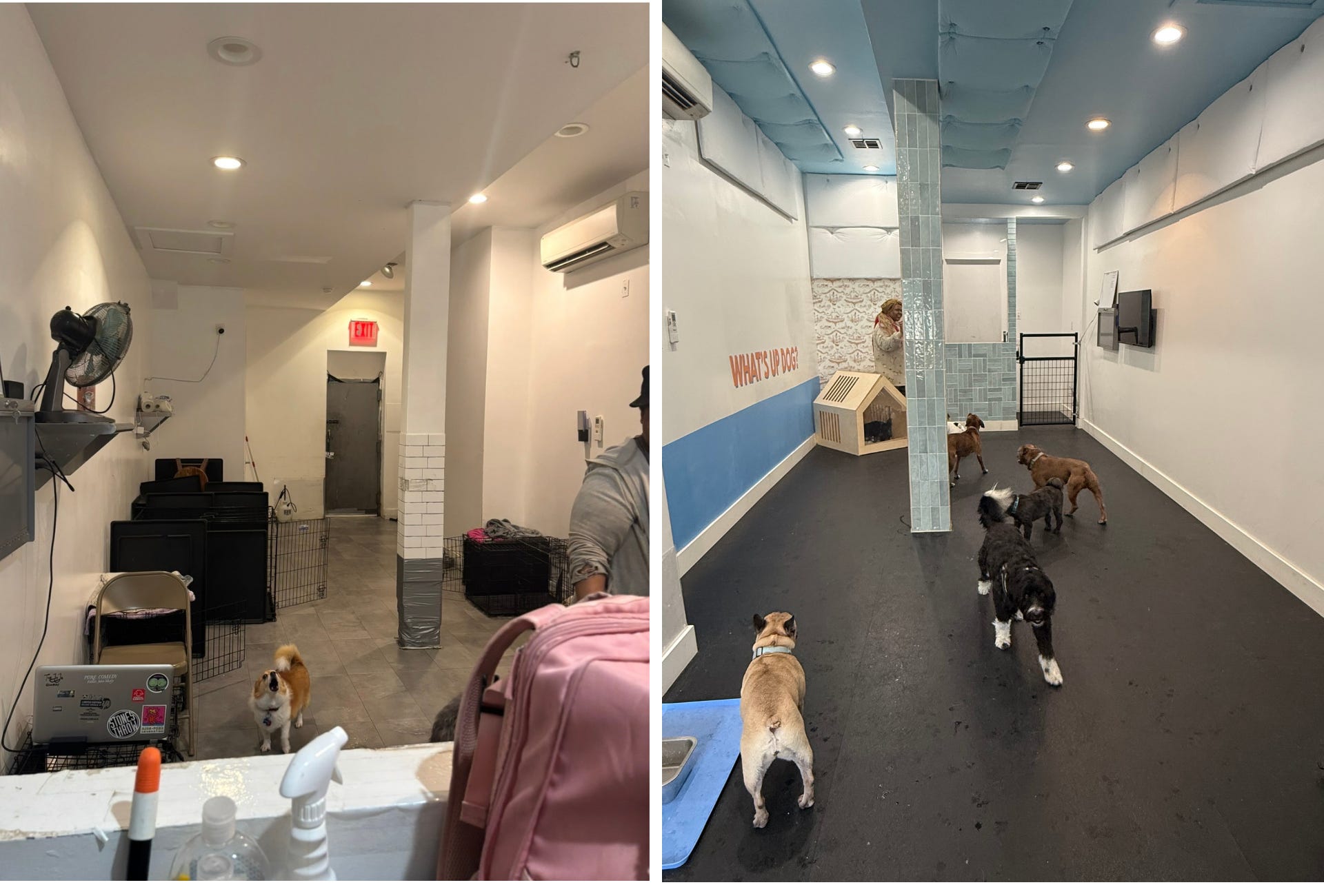
So we got to work. New floors — rubber, better for joints, better for sound, no more slip risk. Sound panels on the walls and ceiling. Paint. Tile. A TV to play nature videos and calming music. We knocked down the crumbling half wall and replaced it with a full wall with a plexiglass window into the play space and proper gates for safe entry and exit.
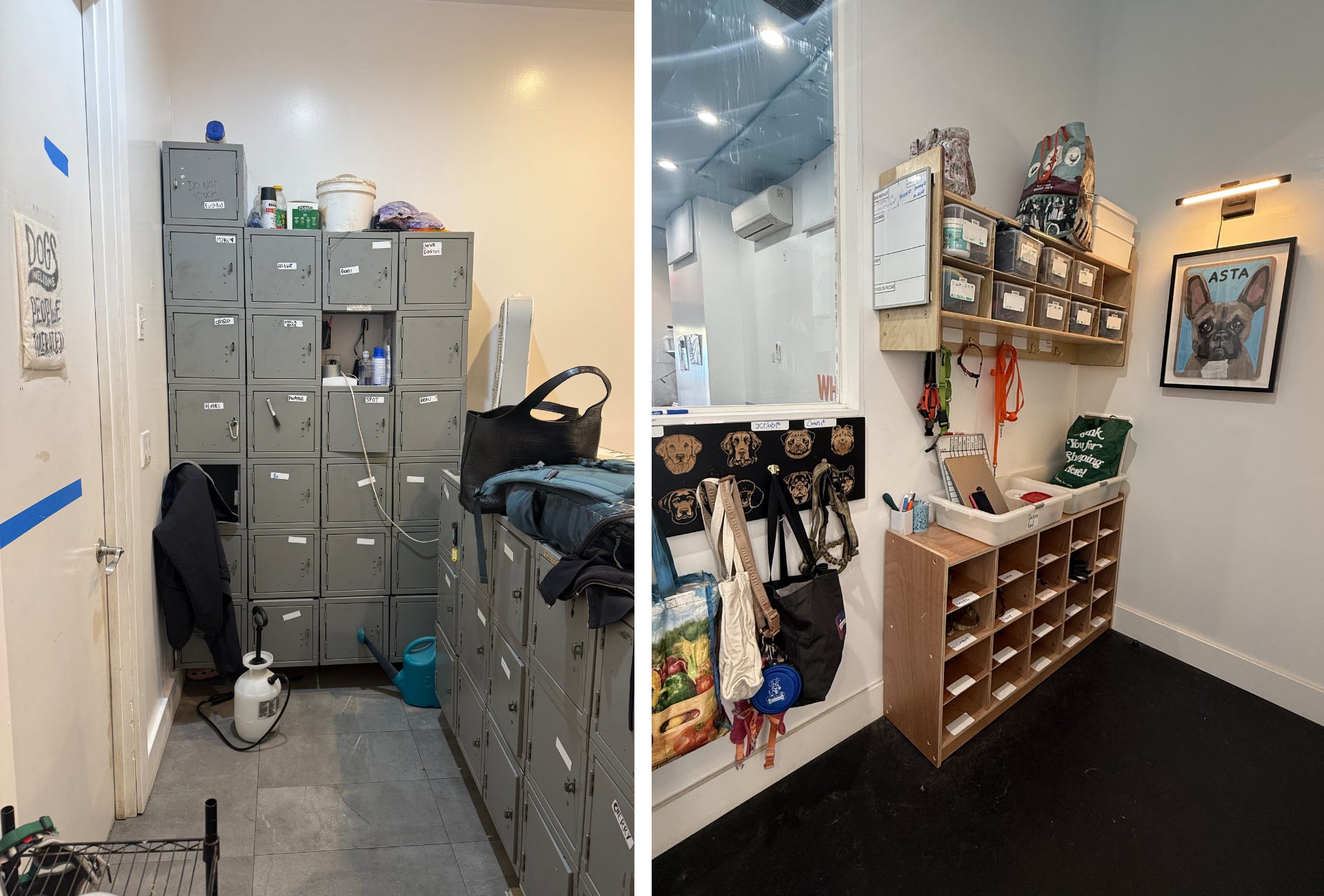
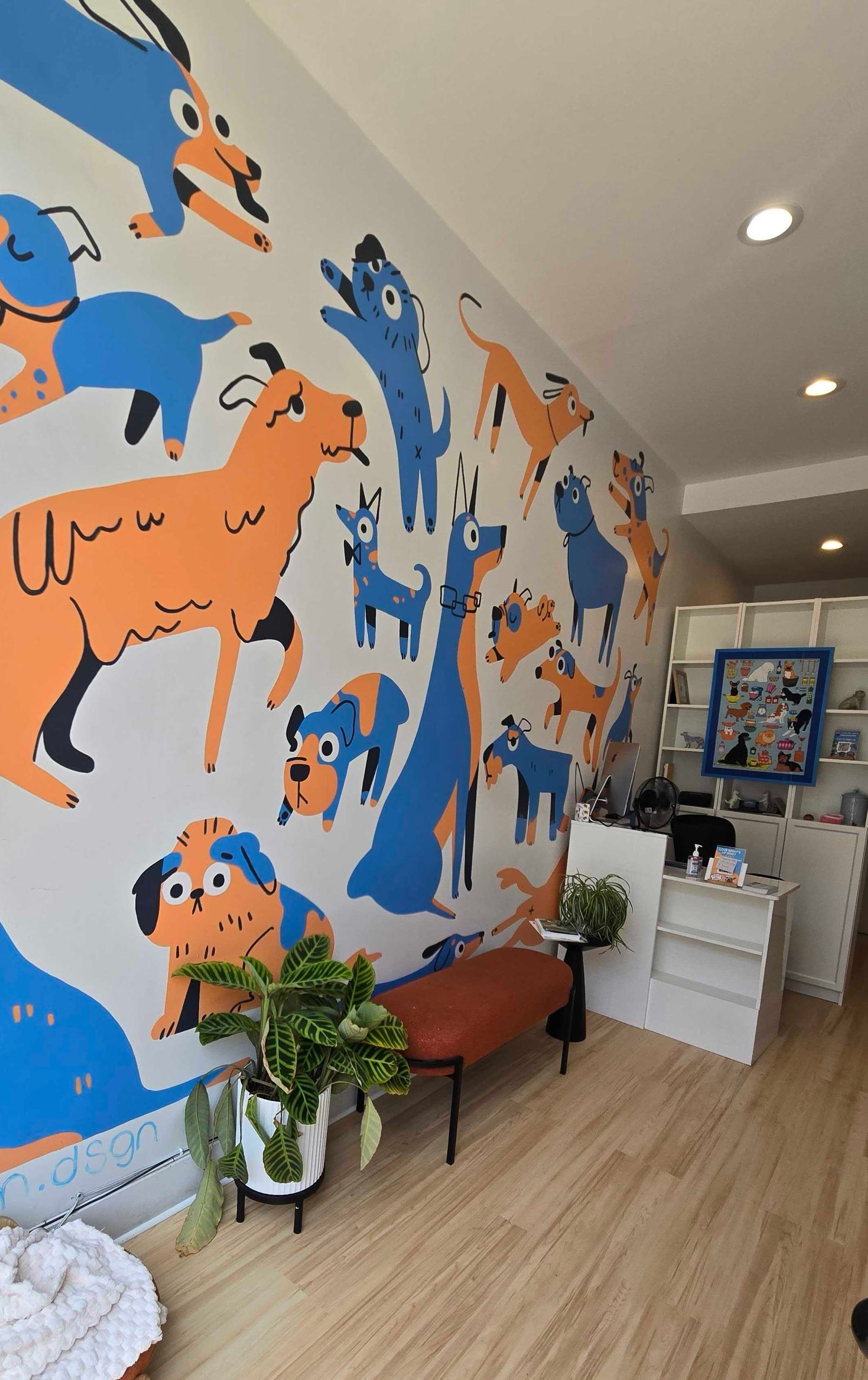
We replaced the back door with a window to the backyard, which brought in light and made the whole space feel less like a holding pen. We redid the front room entirely — paint, storage, new seating for humans and pups. A proper reception area, somewhere that felt like a business that cared about first impressions.
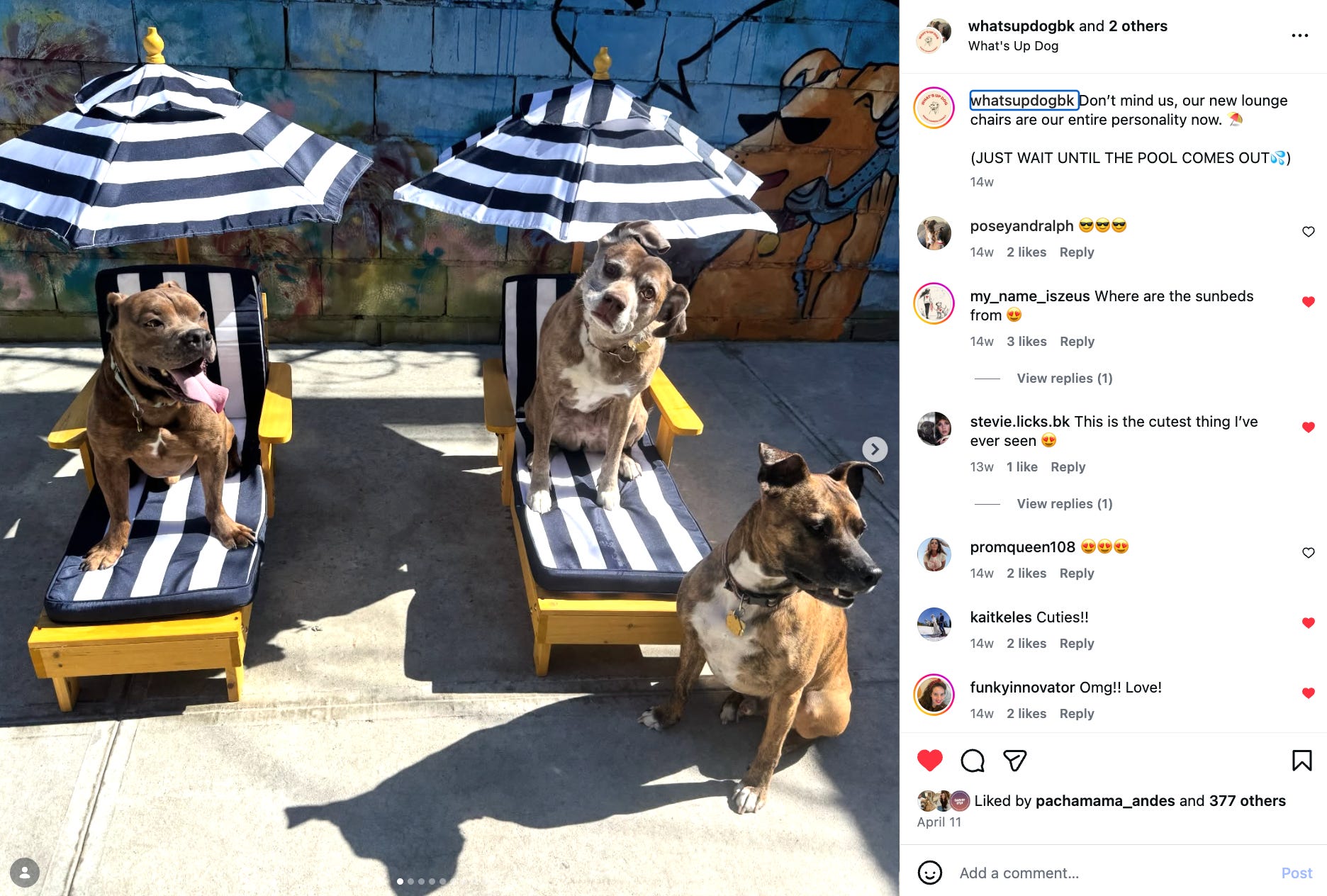
We also added pup-sized lounge chairs to the backyard. Striped, with umbrellas. Mostly because it felt fun. The dogs took to them immediately and provided us with the content for our top performing Instagram post ever — 375 likes and comments like “this is the cutest thing I’ve ever seen.” The space started doing its own marketing.
The changes inside did something quieter but more important.
Our manager had been there before we bought the business. She knew the space, knew the team, knew the dogs. What she didn’t know (and couldn’t have known) was whether any of it could get better. Whether new owners meant new investment, or just new faces saying the same no.
Once she saw we were willing to invest, something shifted. She started initiating. A new feeding protocol. More structured days. A Zone Coordinator program she developed herself, where each team member owns a specific part of the shift — photos, feeding, add-ons, the nap program. Changes designed to be able to scale to multiple locations. The team went from shrugging at the question of what to change, to bringing ideas to management to implement.
We didn’t manufacture that. We just made it possible by saying yes enough times that she believed us.
The transformation wasn’t just internal. It communicated something outward too.
When we bought the business, meet-and-greet no-shows were the norm. People would book, ghost, and disappear. Now we’re booking up to six a week and people are showing up (or calling to reschedule and following through). We’ve heard a lot of positive comments about the front room specifically. New customers walk in and the space tells them something before we say a word: this is a business that takes things seriously.
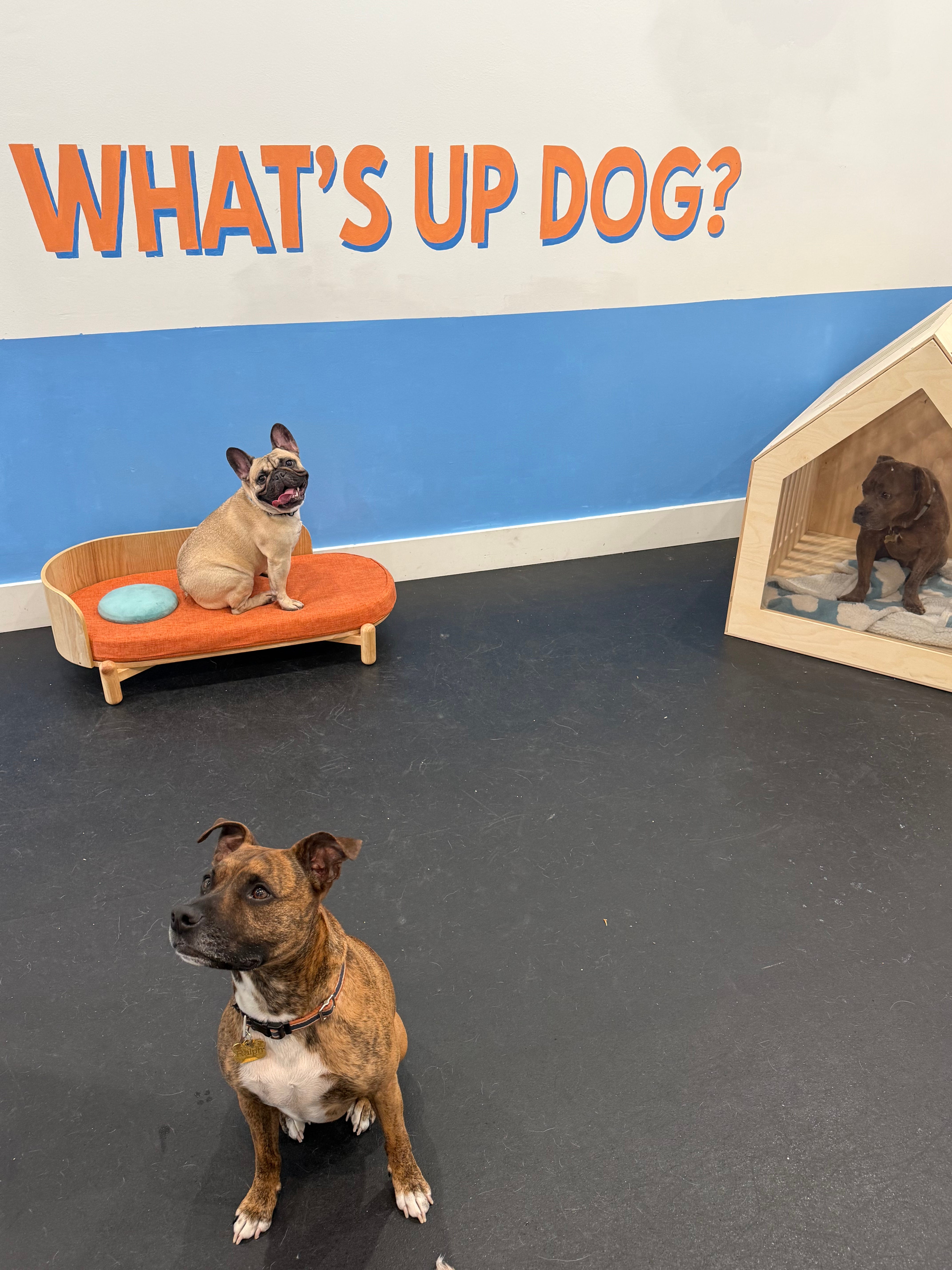
You don’t ghost a place that looks like it has its act together and is in demand.
15 new customers last month 30 days. Staff from competing daycares reaching out about working with us. Clients telling us they can’t imagine leaving Bushwick because we’re here.
We’re not done. The backyard still needs work — we want it to be a place where we can host events, not just outdoor playtime. There’s more to invest, more to build.
But that’s kind of the point. The investment isn’t a project with an end date. It’s an ongoing signal to the team, to the dogs, and to the neighborhood that this place is worth caring about.
They seem to be getting the message.